The Ghost Blog Workflow We Use to Turn Ideas Into Consistent SEO Content
A step-by-step Ghost blog workflow for turning scattered ideas into consistent, SEO-ready content. Built for small teams and content operators who need predictable publishing results without enterprise complexity.
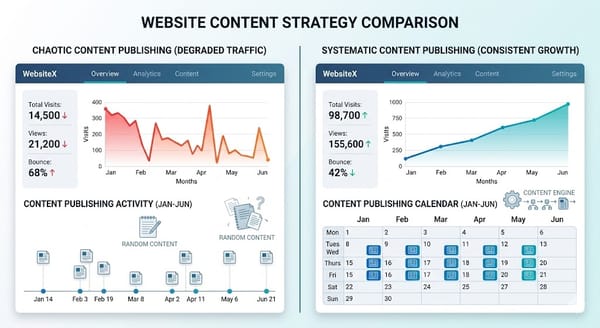
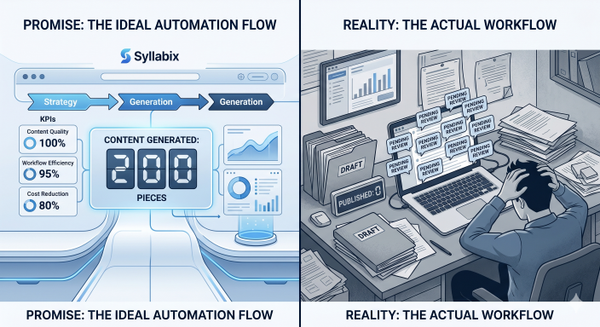
Most content teams start with good intentions and scattered ideas. They end up with inconsistent publishing schedules, weak SEO performance, and content that doesn't connect to business goals.
The problem isn't a lack of ideas or writing ability. It's the absence of a systematic workflow that transforms concepts into search-optimized, publication-ready content.
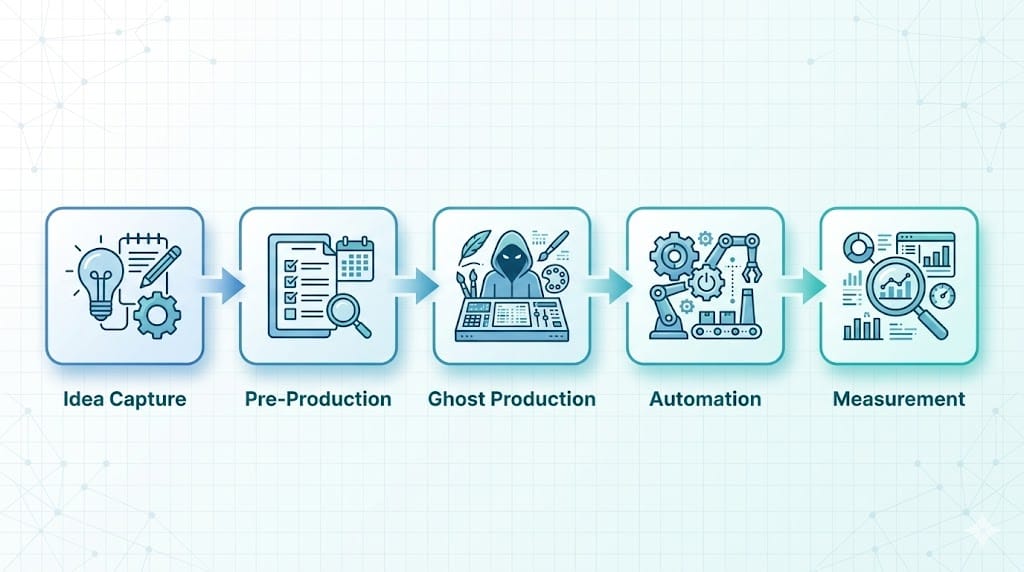
This is the specific Ghost blog workflow we use to move from idea capture to published post without losing quality or SEO value. It's designed for small teams, marketing operators, and content creators who need predictable results without enterprise-level complexity.
From Scattered Ideas to Structured Content Pipeline
Ideation Capture System
Ideas arrive randomly. Phone conversations, competitor analysis, customer support tickets, and industry news. Without a capture system, valuable content concepts disappear.
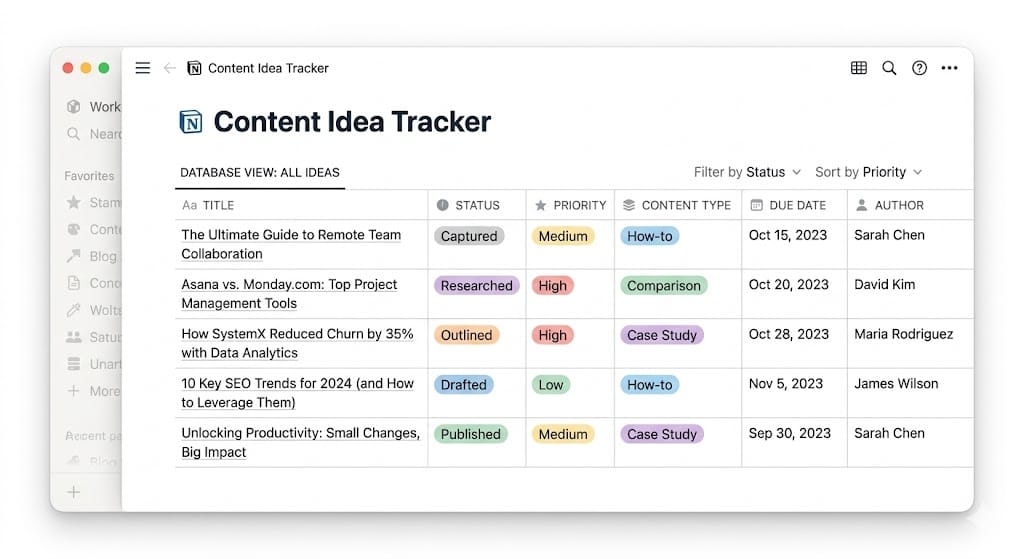
We use a simple Notion database with these fields:
- Idea title
- Source (where it came from)
- Priority level (high/medium/low)
- Search volume estimate
- Content type (how-to, comparison, case study)
- Status (captured/researched/outlined/drafted/published)
The key is immediate capture. When an idea surfaces, it goes directly into the database with minimal friction. No elaborate categorization or lengthy descriptions.
Organizing by Intent and Priority
Not all ideas deserve equal attention. We sort captured ideas using two criteria:
Search Intent Match: Does this idea align with what our audience actively searches for? We validate this with basic keyword research, not elaborate SEO audits.
Business Relevance: Does this content support our core services or product offerings? Ideas that connect directly to revenue opportunities get priority.
High-priority ideas combine strong search intent with clear business relevance. Medium-priority ideas have one or the other. Low-priority ideas might be interesting but lack both elements.
SEO Opportunity Assessment
Before moving ideas into production, we run a quick SEO assessment:
Keyword Difficulty: Can we realistically rank for the primary keyword with our domain authority?
Content Gap Analysis: What's missing from existing top-ranking content on this topic?
Internal Linking Potential: How does this content connect to our existing published posts?
This assessment takes 10-15 minutes per idea. It prevents investing time in content that won't perform or connect to our broader content strategy.
The Pre-Production Checklist That Prevents Content Drift
Research and Planning Phase
Once an idea passes the priority filter, it enters structured research. This phase prevents the common problem of starting to write without a clear direction.
Competitor Content Analysis: We review the top 5 ranking pieces for our target keyword. Not to copy, but to identify content gaps and unique angles.
Audience Research: What specific questions does our audience ask about this topic? We check support tickets, sales calls, and community discussions.
Resource Gathering: What data, examples, or expert quotes do we need? We collect these before writing begins.
Keyword Validation and Search Intent Matching
We validate keywords using Ahrefs or SEMrush, but the focus is practical, not perfectionist.
Primary Keyword: One main keyword that accurately describes the content.
Secondary Keywords: 2-3 related terms that naturally fit the content.
Search Intent Verification: We examine the current top-ranking pages to confirm what searchers actually want when they use our target keyword.
If the search intent doesn't match our planned content approach, we adjust the angle or choose a different keyword.
Outline Creation and Resource Gathering
Every piece gets a detailed outline before writing starts. This outline includes:
Introduction Hook: How we'll open the piece to capture attention.
Main Sections: 3-5 core sections that fully address the topic.
Supporting Elements: Data points, examples, or quotes for each section.
Internal Links: Existing content we'll link to from this piece.
Call-to-Action: Specific action we want readers to take.
The outline serves as a roadmap. If we can't create a solid outline, the idea needs more research or a different approach.
Ghost-Specific Production Steps for SEO-Ready Posts
Draft Creation Workflow in Ghost
We write directly in Ghost, not external tools. This eliminates the copy-paste step and formatting issues.
Ghost Editor Setup: We use the Ghost editor's built-in formatting tools and avoid complex HTML unless necessary.
Section Structure: Each main section gets an H2 heading. Subsections use H3 headings. This creates a clear content hierarchy for both readers and search engines.
Internal Linking During Writing: We add internal links as we write, not as an afterthought. This ensures natural link placement and better user experience.
SEO Field Optimization
Ghost provides specific fields for SEO optimization. We fill these systematically:
Meta Title: 50-60 characters including the primary keyword.
Meta Description: 150-160 characters that accurately describe the content and include the primary keyword.
URL Slug: Clean, keyword-rich slug that matches the content focus.
Featured Image Alt Text: Descriptive alt text that includes relevant keywords when appropriate.
Excerpt: A brief summary that works for social sharing and email newsletters.
Internal Linking Strategy
Internal links connect new content to existing posts and guide readers through related topics.
Contextual Links: We link to related content when it genuinely adds value to the current topic.
Pillar Content Connection: New posts link back to comprehensive pillar content when relevant.
Link Anchor Text: We use descriptive anchor text that indicates what readers will find on the linked page.
Link Quantity: 3-5 internal links per 1,000 words, placed naturally within the content flow.
Review Process for Consistency
Before publishing, every post goes through a standard review:
Content Quality: Does the post fully address the promised topic?
SEO Elements: Are all meta fields completed and optimized?
Internal Links: Do all links work and add value?
Brand Voice: Does the tone match our established voice and style?
Call-to-Action: Is the CTA clear and relevant to the content?
This review takes 15-20 minutes but prevents publishing content that doesn't meet our standards.
Automation Points That Actually Save Time
Ghost API Integrations
We use Ghost's API for specific automation tasks that eliminate repetitive work:
Content Scheduling: Automated scheduling based on our publishing calendar.
Social Media Integration: Automatic posting to LinkedIn and Twitter when new content is published.
Email Newsletter: New blog posts are automatically included in our weekly newsletter.
Analytics Integration: Post performance data flows into our content tracking system.
Scheduling Workflows
Consistent publishing requires systematic scheduling. We use a simple calendar approach:
Publishing Days: We publish on Tuesdays and Thursdays, giving us time for promotion and response.
Lead Time: Content is scheduled at least one week in advance, allowing for last-minute adjustments.
Batch Processing: We write multiple posts in focused sessions rather than one-off creation.
Quality Checks and Automation Opportunities
Some quality checks can be automated:
Broken Link Detection: Monthly automated scans for broken internal and external links.
Image Optimization: Automatic image compression and alt text reminders.
SEO Field Completion: Automated checks that all required SEO fields are filled before publishing.
Content Length Verification: Alerts when posts fall below or exceed our target word count ranges.
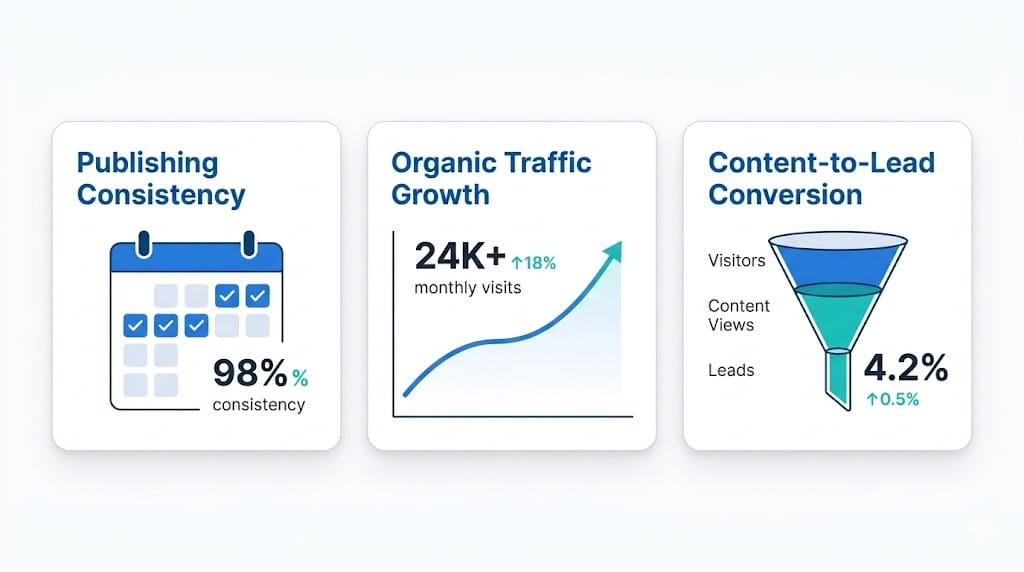
Measuring What Matters Without Dashboard Paralysis
Minimal Viable Metrics
We track three core metrics that directly indicate workflow effectiveness:
Publishing Consistency: Are we hitting our planned publishing schedule?
Organic Traffic Growth: Is our content attracting search traffic over time?
Content-to-Lead Conversion: How many leads come from blog content each month?
These metrics tell us if our workflow is working without overwhelming us with data.
Tracking Workflow Effectiveness
Beyond content performance, we measure the workflow itself:
Idea-to-Publish Time: How long does it take to move from idea capture to published post?
Content Quality Consistency: Are we maintaining quality standards across all posts?
Resource Efficiency: How much time do we spend on each phase of the workflow?
Performance-Based Adjustments
We review workflow performance monthly and make specific adjustments:
Bottleneck Identification: Where do posts get stuck in the workflow?
Quality Issues: What types of problems appear most frequently in our review process?
Time Allocation: Which phases take longer than expected and why?
Success Patterns: What characteristics do our best-performing posts share?
These insights drive workflow improvements without major system overhauls.
Building Your Own Ghost Blog Workflow
This workflow works because it's systematic without being rigid. It provides structure while allowing for creativity and adaptation.
The key is starting with your current process and adding systematic elements gradually. Don't try to implement everything at once.
Begin with idea capture and basic SEO optimization. Add automation and advanced tracking as your team grows comfortable with the foundational elements.
Your content workflow should serve your business goals, not become a goal itself. Focus on consistency, quality, and measurable results.
Ready to audit your current content workflow and identify specific improvement opportunities? We help content teams build systematic approaches that actually work in practice. Contact us for a workflow assessment that identifies your biggest content production bottlenecks and provides actionable next steps.