The Right Way to Automate Outreach Without Sounding Automated
You've received them—those painfully obvious automated messages that start with "Hi [FIRST_NAME]" or reference your company's "amazing work in the INDUSTRY] space." The solution isn't choosing between efficiency and authenticity.
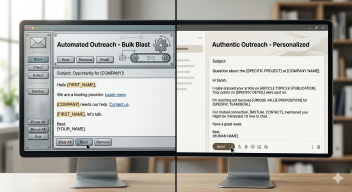
You've received them. Those painfully obvious automated messages that start with "Hi [FIRST_NAME]" or reference your company's "amazing work in the [INDUSTRY] space." They land with all the warmth of a parking ticket.
Yet here you are, needing to scale your own outreach without becoming another spam bot in someone's inbox. The tension is real: manual outreach doesn't scale, but automated outreach often doesn't convert.
The solution isn't choosing between efficiency and authenticity. It's building systems that amplify human connection rather than replace it. This framework shows you exactly how to automate the mechanics while preserving the moments that matter.
The Automation-Authenticity Paradox: Why Most Outreach Fails
Automated outreach fails not because automation is inherently bad, but because most operators automate the wrong things.
The typical approach treats personalization like a mail merge. Insert company name here, industry there, maybe pull a recent LinkedIn post. The result feels mechanical because it is mechanical—surface-level data plugged into obvious templates.
Recipients spot these patterns instantly:
Generic opening lines that could apply to anyone: "I noticed you're doing great things at [COMPANY]" or "Your recent growth caught my attention."
Shallow personalization that demonstrates no real research: "I saw you work in [INDUSTRY]" when that information is literally in their email signature.
Template-heavy structure where every paragraph follows the same format across hundreds of messages.
Robotic follow-up sequences that ignore whether the previous message made sense or landed well.
Timing that ignores context, like following up on a product pitch the day after someone posts about budget cuts.
The problem isn't that these messages are automated. It's that they're automated without intelligence. They scale the mechanics of outreach while completely missing what makes outreach work: relevant value delivered at the right moment.
The 80/20 Personalization Framework: What Actually Needs to Be Custom
Not every element of your outreach needs personalization. In fact, over-personalizing can hurt more than help when it leads to shallow, obvious customization.
Here's what actually moves the needle:
High-Impact Personalization (The 20%)
Context-specific opening lines that reference something meaningful about their current situation. Not just "I saw your recent post" but "Your point about retention challenges in subscription businesses resonates—we've seen similar patterns with our education clients."
Relevant value propositions that connect your solution to their specific challenges. Instead of generic benefits, explain exactly how your approach addresses their particular situation.
Timing-based messaging that acknowledges their current context. Reaching out during budget season? Reference it. Following up after a company announcement? Connect to it meaningfully.
Industry-specific examples that demonstrate you understand their world. Don't just mention their industry—show you know its unique challenges and opportunities.
Low-Value Customization Traps (The 80% You Can Systematize)
Company name insertion beyond the greeting. Once you've addressed them properly, stop sprinkling their company name throughout like seasoning.
Generic compliments about their website, recent growth, or team. These add no value and feel obviously templated.
Surface-level LinkedIn references that anyone could make after 30 seconds of scrolling.
Over-customized signatures or email formatting that changes based on recipient data.
Excessive dynamic fields that make your message read like a Mad Libs exercise.
The framework: Personalize the hook and the value proposition. Systematize everything else.
Practical Implementation
Start with three personalization points maximum:
- Context-aware opening (why now?)
- Specific value connection (why this?)
- Relevant proof point (why trust?)
Everything else—your company description, process explanation, next steps—can follow proven templates. This approach lets you scale the structure while customizing the elements that actually influence response rates.
Building Your Outreach Tech Stack: Tools That Support Human Connection
The right tools amplify human insight rather than replace it. Here's how to build a stack that scales authentically:
Data Collection and Research
Automated research tools like Clay or Apollo can gather basic company information, recent news, and contact details. But use this data as input for human analysis, not direct insertion into templates.
Social listening setup through tools like Mention or Google Alerts to catch relevant timing opportunities—funding announcements, leadership changes, industry challenges your prospects are discussing.
CRM integration that tracks conversation history and context. Your automation should know if someone already said no, what they cared about in previous conversations, and how long it's been since meaningful contact.
Segmentation and Targeting
Behavioral segmentation based on engagement patterns, not just demographics. Someone who opened three emails but never replied needs different messaging than someone who's never engaged.
Trigger-based sequences that respond to specific actions or events rather than arbitrary time delays. Follow up when they visit your pricing page, not just because it's been three days.
Dynamic list building that adds prospects to sequences based on current context—recent funding, job changes, industry events—rather than static criteria.
Message Creation and Delivery
Template libraries organized by situation, not just by sequence position. Build templates for different contexts: post-funding outreach, competitive displacement, renewal conversations.
A/B testing infrastructure that tests messaging approaches, not just subject lines. Test different value propositions, proof points, and conversation starters.
Send time optimization based on recipient behavior patterns, not generic "best practice" timing.
Quality Control Systems
Preview functionality that shows exactly how each message will appear before sending. Catch obvious automation errors before they reach prospects.
Response categorization that tracks not just whether people replied, but what type of response you received. "Not interested" is different from "interesting, but not now."
Feedback loops that capture why prospects say no and feed that intelligence back into your messaging strategy.
Integration Architecture
Your tools should talk to each other seamlessly:
- CRM updates trigger sequence adjustments
- Website behavior influences email content
- Response sentiment affects follow-up timing
- Conversation outcomes inform future targeting
The goal is creating a system where automation handles the logistics while human intelligence drives the strategy and personalization.
The Pre-Launch Audit: Testing Your Outreach for Robot Red Flags
Before launching any automated sequence, run it through this quality control checklist:
The Human Test
Read every message aloud. If it sounds like a robot wrote it, your prospects will think so too. Pay attention to:
- Unnatural phrasing that prioritizes keyword insertion over readability
- Repetitive sentence structures across messages
- Transitions that feel forced or mechanical
Send test messages to yourself and colleagues. Fresh eyes catch automation signals you might miss. Ask specifically: "Does this feel like it was written for me, or for everyone?"
The Personalization Audit
Verify data accuracy across your entire prospect list. One wrong company name or outdated job title undermines your entire sequence's credibility.
Check personalization logic. Make sure your dynamic fields have fallback options and that your conditional logic actually works. "Hi [FIRST_NAME]" is worse than "Hi there."
Test edge cases. What happens when someone has a long company name? Multiple job titles? Recent job changes? Your system should handle these gracefully.
The Context Check
Review timing logic. Are you following up appropriately based on previous interactions? Sending product demos to people who already said they're not in market?
Validate sequence flow. Does each message build logically on the previous one? Can someone jump into your sequence at any point and understand the context?
Check for conversation killers. Avoid messages that make it hard to respond naturally—overly complex questions, multiple CTAs, or requests that require significant effort.
The Authenticity Assessment
Eliminate obvious templates. If your message could work for any company in any industry, it's too generic.
Remove automation language. Phrases like "I wanted to reach out," "I hope this email finds you well," or "I'd love to connect" scream automation.
Test your value proposition. Is it specific enough that only your ideal prospects would find it relevant? Generic value props feel automated even when they're not.
The Technical Validation
Test all links and attachments. Broken links destroy credibility and suggest your outreach isn't carefully managed.
Verify sender reputation. Use tools like Mail Tester to check how your emails appear to spam filters.
Check mobile formatting. Most prospects read email on mobile. Your carefully crafted message might look terrible on a phone screen.
The Response Handling Audit
Plan for common responses. What happens when someone says "not interested," "send me more information," or "call me next quarter"? Your system should handle these appropriately.
Test unsubscribe processes. Make it easy for people to opt out, and ensure your system respects those preferences immediately.
Prepare for positive responses. When someone says yes, can you respond quickly and personally? Don't let automation delays kill momentum.
Run this audit for every sequence, every template, and every major change to your outreach system. The goal is catching robot signals before your prospects do.
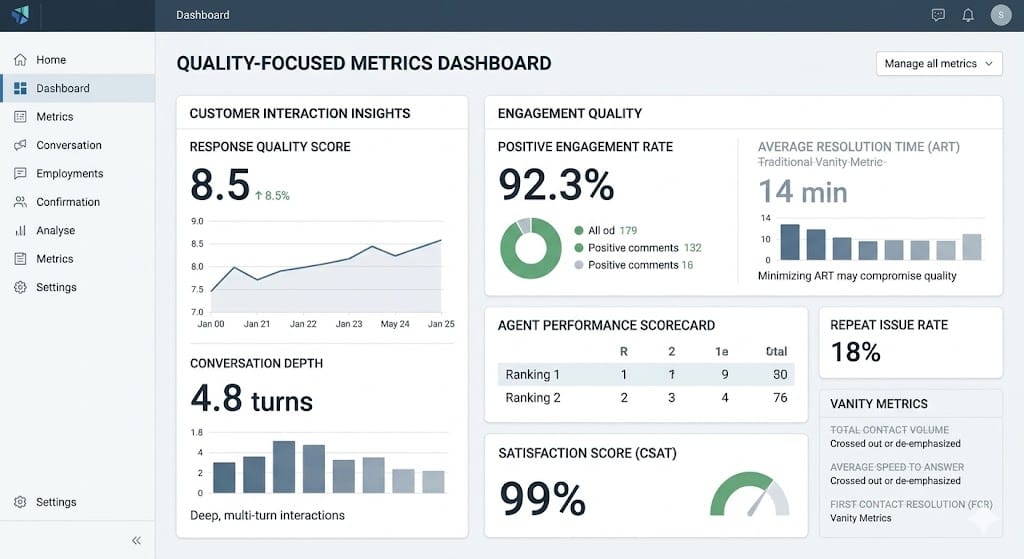
Measuring What Matters: Response Quality Over Response Rate
Most outreach metrics focus on volume: open rates, response rates, meetings booked. But these vanity metrics can mislead you into optimizing for the wrong outcomes.
Quality-focused measurement tracks whether your outreach creates meaningful business conversations, not just inbox activity.
Response Categorization
Track not just whether people respond, but how they respond:
Positive engagement: Requests for more information, questions about your solution, scheduling conversations.
Qualified objections: Specific concerns about timing, budget, or fit that indicate genuine consideration.
Polite declines: Professional "not interested" responses that maintain relationship potential.
Negative reactions: Complaints about your approach, unsubscribe requests, or hostile responses.
This categorization reveals whether your automation feels helpful or intrusive. High response rates mean nothing if most responses are complaints.
Conversation Depth Tracking
Measure how far conversations progress:
Initial response rate: What percentage of prospects engage at all?
Second exchange rate: How many respond to your follow-up after their initial reply?
Meeting conversion rate: What percentage of email conversations become actual meetings?
Pipeline progression: How many outreach-generated conversations become qualified opportunities?
Authentic outreach should show strong performance across all these metrics, not just the first one.
Feedback Analysis
Systematically capture and analyze prospect feedback:
Exit interviews: When someone says no, ask why. Their answers reveal whether your targeting, timing, or messaging needs adjustment.
Response sentiment analysis: Are people responding positively or grudgingly? Enthusiasm levels indicate message-market fit.
Referral tracking: Do prospects refer you to colleagues or other companies? This suggests your outreach created genuine value.
Long-term Relationship Metrics
Re-engagement rates: How many "not now" prospects eventually become customers? Good outreach plants seeds for future opportunities.
Brand perception tracking: Are prospects more likely to engage with your content, follow your company, or respond to future outreach after your initial sequence?
Network effects: Do your outreach efforts generate inbound interest from people you didn't directly contact?
Optimization Framework
Use these metrics to continuously improve:
A/B testing beyond subject lines: Test different value propositions, personalization approaches, and conversation starters. Measure impact on conversation quality, not just open rates.
Cohort analysis: Compare performance across different prospect segments, time periods, and messaging approaches. Look for patterns in what drives quality engagement.
Feedback integration: Regularly update your approach based on prospect feedback and conversation outcomes. Your outreach should evolve as you learn what resonates.
The goal is building outreach that people appreciate receiving, not just tolerate. When you optimize for response quality over quantity, you create sustainable systems that generate better business outcomes while building your reputation rather than damaging it.
Ready to Scale Outreach That Actually Converts?
Most operators know their current outreach could be better, but aren't sure which changes would make the biggest difference. Our workflow audit identifies exactly where automation can help—and where human touch remains essential.
We'll map your current process, identify automation opportunities that won't sacrifice authenticity, and create a practical implementation plan that scales your best outreach practices.
Book your workflow audit and start building outreach systems that prospects actually want to receive. Book Here